On a dedicated heavy-haul railway line crossing the Yellow River Bridge, synthetic sleepers designed and manufactured by our team were installed. On the seventh anniversary of the line’s opening, our technical team conducted a follow-up site inspection.
This line was designed for speeds of up to 100 km/h with an axle load of 25 tons. The bridge is an open-deck steel structure spanning over one kilometer across the Yellow River. As a newly built dedicated line, this marked the first application of synthetic sleepers in such a context within China.
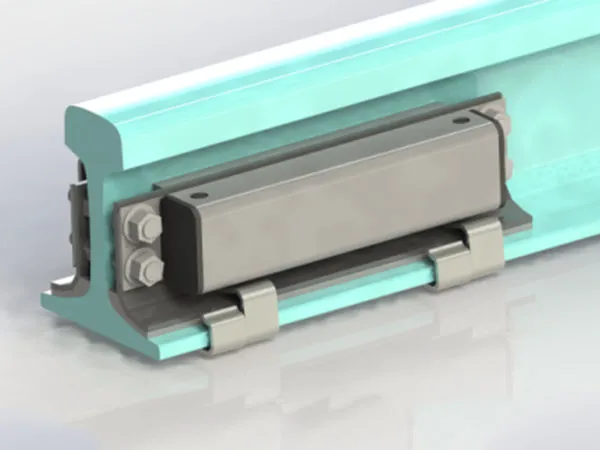
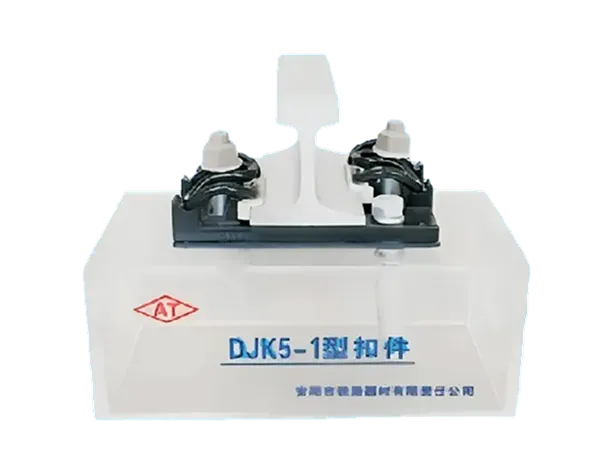
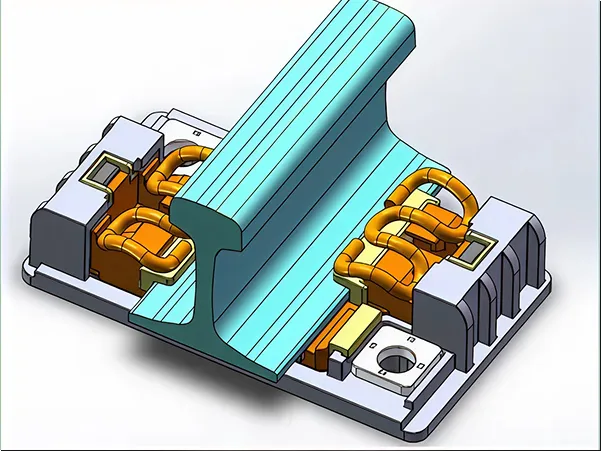
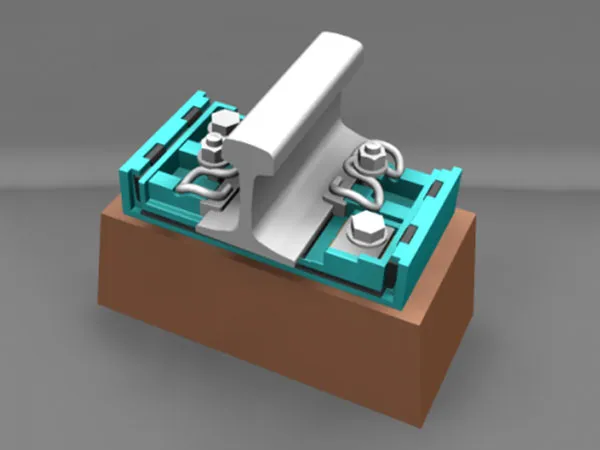
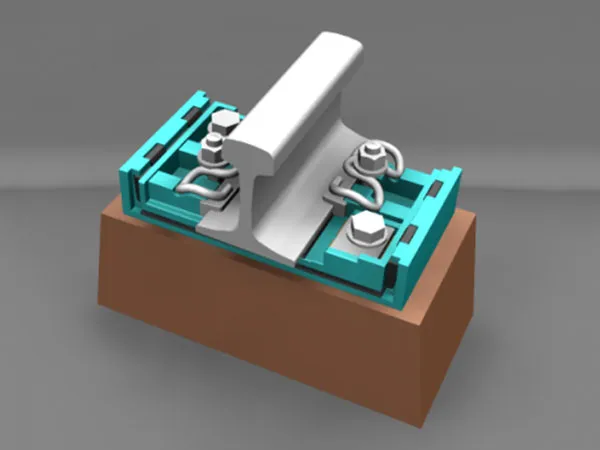
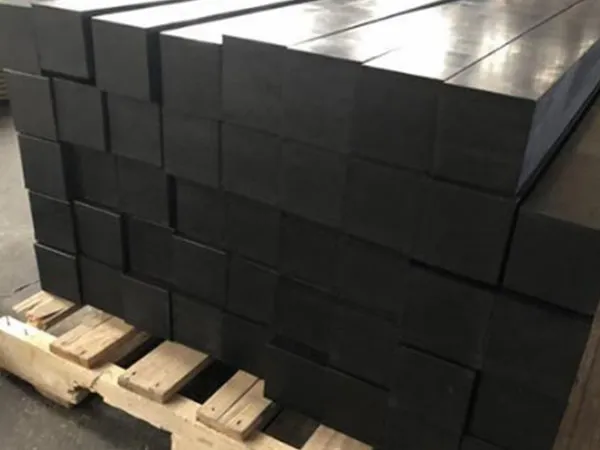
To address issues observed with conventional synthetic sleepers (density 740 kg/m³)—specifically long-term bolt loosening and detachment under heavy loads—and to avoid excessive stiffness and lack of elastic buffering in ultra-high density sleepers (density >1000 kg/m³), which transfers excessive fatigue loads to the bridge steel structure, our technical personnel collaborated with researchers from Southwest Jiaotong University. Together, they performed comprehensive calculations and design optimizations for both the bridge and track system dynamics. The final solution adopted a new-generation synthetic sleeper model featuring moderate density and stiffness alongside enhanced material strength. Innovations were also made to the fastening system and its interface with the sleeper.
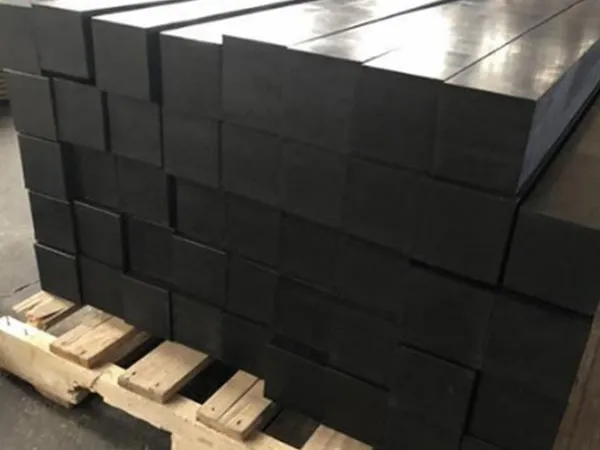
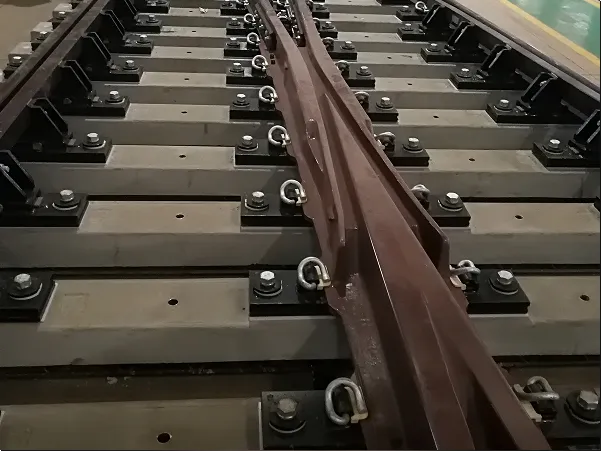
During construction, to improve installation efficiency and accuracy, each sleeper’s position was pre-calibrated. Every sleeper was custom-manufactured in the factory according to precise dimensional requirements tailored to its specific location.
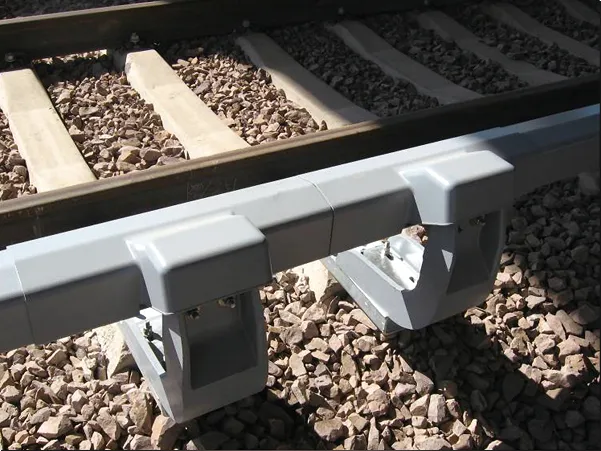
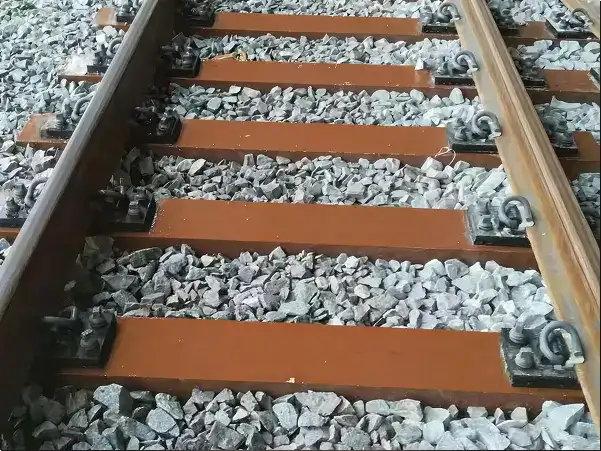
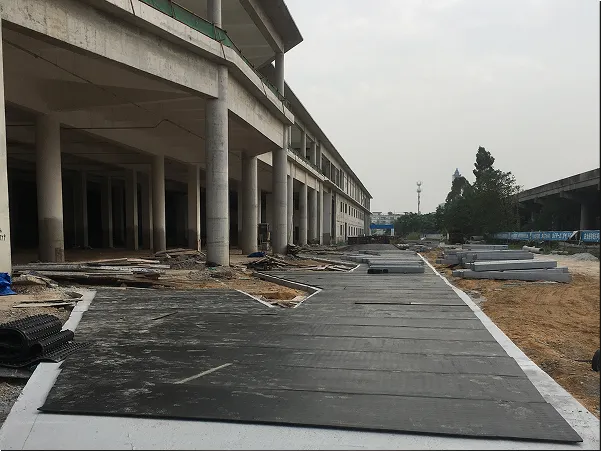
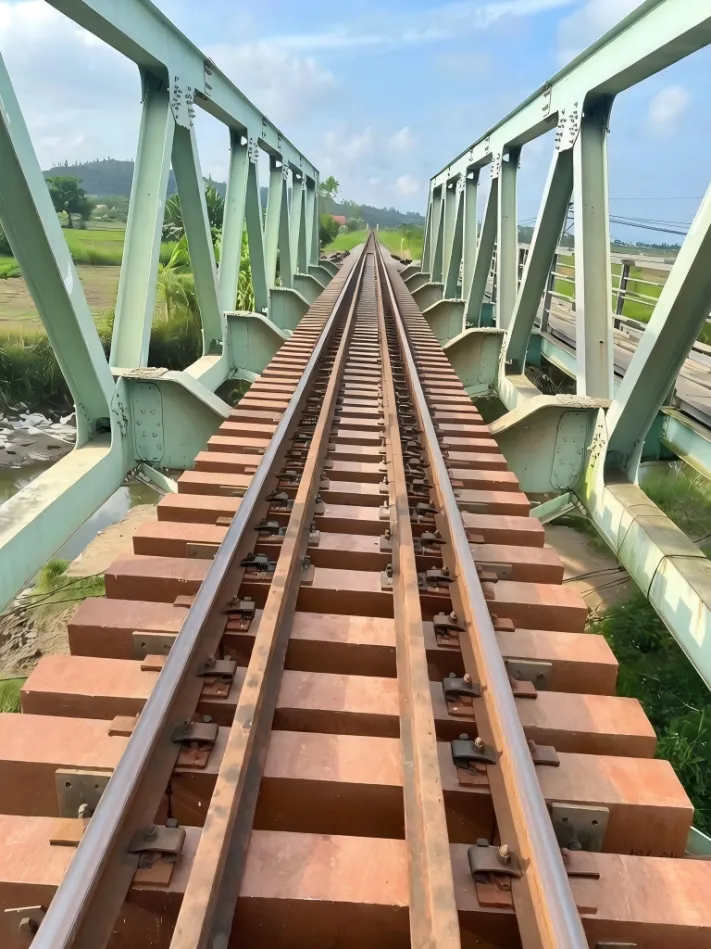
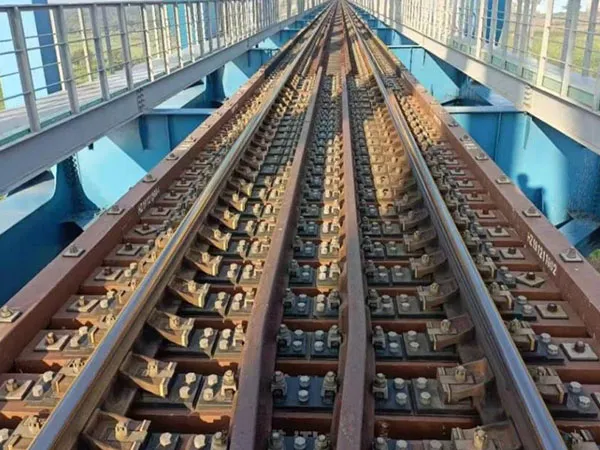
Figure 1 shows the installation phase; Figure 2 depicts the condition after seven years of operation.
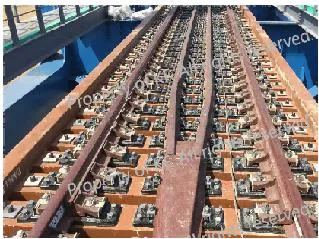
Fig. 1: Sleeper installation during construction
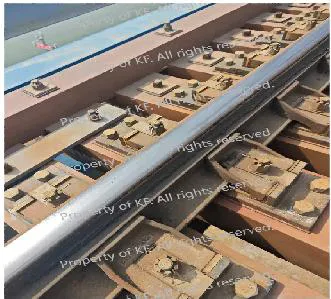
Fig. 2: Synthetic sleeper status after 7 years of heavy freight traffic
Site inspection revealed that the sleeper surfaces remain smooth, flat, and visually indistinguishable from their initial installation state. No bolt loosening or anomalies were found in the fastening system. Despite seven years of high-volume heavy-haul operations, the synthetic sleepers and track system have demonstrated stable performance. Feedback from on-site maintenance crews confirmed no operational abnormalities or repairs required for the sleeper system throughout this period.
For heavy-haul, high-speed, and large-span open-deck steel bridges, we consistently adhere to a “one bridge, one study” customized design philosophy. This approach involves targeted simulation and field validation of sleeper stiffness/strength, fastening interfaces, and dynamic load adaptability based on specific bridge characteristics, environmental conditions, and operational demands—ensuring structural safety margins, long-term durability, and minimal maintenance requirements.
Intellectual Property Notice:This article and accompanying images are proprietary. Unauthorized reproduction or redistribution is strictly prohibited.